Thursday, October 17, 2019

a gracious invitation


I've got a confession to make. I'm not very good at praying. Sure, I pray regularly for my church and my family, as well as for those who are sick and in need. I'm a pastor so obviously I do a lot of praying, but I wouldn't say I'm particularly good at it - not like those "prayer warriors" you sometimes see in other churches or on TV. When asked about his prayer life, Frederick Buechner said that it was "meager, random, sporadic, inarticulate, and mostly blubbering". I can relate to that.

That's why passages in the Bible like 1 Thess. 5:17 tend to cause me a bit of consternation. Depending on how you translate it, the verse reads - "Pray continually", "pray constantly", or "pray without ceasing". So does this mean we have to become like monks and get on our knees and pray all day long? Do we have to go online and order our mail order prayer shawls? Do we need to join an organization where a steady stream of volunteers file into prayer rooms to “pray without ceasing” in the hope of Jesus imminent return? I sure hope not.

Let's go back to the text. "Rejoice always, pray continually, give thanks in all circumstances; for this is God’s will for you in Christ Jesus." - 1 Thess. 5:16, 17, 18. When Paul says to rejoice always, he doesn't mean that we have to be happy all the time, but that we can have joy even in the midst of our suffering. When he says to give thanks in all circumstances, he means that no matter what is happening in a given situation, we can have a thankful and grateful disposition toward God. So when it comes to prayer, I think the context of this verse seems to indicate that it is really about an attitude of the heart.

So what does this mean? What does it look like? I think it means having a prayerful spirit. Thinking God's thoughts after Him. Saying back to Him what He first says to us in His Word. Keeping the conversation going with our Creator, Savior, and Friend.

The daily prayer life of the Christian will vary of course from person to person, but these three times of day are a good place to start - morning, meals, and night. Pray the Lord's Prayer and/or Luther's Morning Prayer when you wake up, say a prayer of blessing over your meals during the day, and then pray the Lord's Prayer and/or Luther's Evening Prayer at night, along with whatever personal petitions you may have. Sprinkle in a few psalms, hymns, and spiritual songs throughout the day and you'll be on your way to a fruitful prayer life that will grow as you grow in the grace of your Lord Jesus Christ.

Remember - Jesus gave His disciples the Lord's Prayer as a gift. It's really our prayer when you think about it. His prayer is the High Priestly Prayer in John 17. Our prayer is the Lord's Prayer - so we shouldn't be afraid to use it early, often, and late.

Here's another reminder - scripture and prayer always go together – like salt and pepper, milk and cookies, peanut butter and jelly. Luther said that when he prayed, he always did so with an open Bible in his hand. It's like breathing – inhaling and exhaling – as God speaks to us in His Word and we speak back to Him what He has said.

Praying continually means always being about the things of God no matter where you are or what is going on around you. Asking, seeking, knocking, thinking, pondering – at work, at home, at church, with the kids, on vacation – all the while knowing who you are and Whose you are in Christ. It's a gracious invitation to enter into the inner intimate life of our loving God – Father, Son, and Holy Spirit.

Before the children of Israel entered into the promised land of Canaan, Moses said to them in Deut. 6 - "These commandments that I give you today are to be on your hearts. Impress them on your children. Talk about them when you sit at home and when you walk along the road, when you lie down and when you get up. Tie them as symbols on your hands and bind them on your foreheads. Write them on the door frames of your houses and on your gates."

Moses wasn't instructing the people of Israel to get out their sharpies and face paint. He was reminding them to think about and talk about the words of God all the time – no matter where they were or what they are doing. That's why they needed to be on their hearts and why their children needed to learn them - so that they could recall them when they were far from home – even in a place like Babylon.

We need to be reminded of this today as well. God has given us His Word and the wonderful gift of prayer, so that we might always remember that He is our God and we are His people, and that we can always come to Him at any time to “pray, praise, and give thanks.”

So then, let us indeed rejoice always, pray continually, and give thanks in all circumstances; for this is God’s will for us in Christ Jesus.

+++


Tuesday, October 1, 2019

eyewitness of his majesty

Image result for eyewitness of his majesty

He was an old man. He couldn't hear anymore. He could barely see. His body was broken down after a lifetime of hard work ... from foraging to fishing to fishing for men. Though his body was failing him, his mind was still sharp. He could still remember everything - just like the Master had said.

He remembered ...

- seeing the Master and hearing His voice for the first time along the shore of the Sea of Galilee.

- pulling in a big catch of fish at the Master's request - and realizing that this man wasn't just any ordinary man.

- watching Him walk on water and then getting out of the boat and actually doing it himself!

- making a great confession of faith to the Master - "the Christ, the Son of the Living God".

- then enduring a stinging rebuke just a few moments later after trying to keep Him from His mission.

- walking to the top of the mountain with the Master, and along with James and John, and there experiencing something few other human beings have.

- and then, of course, the events of holy week - the arrival, the parade, the temple, the supper, the garden, the betrayal, the arrest, the denial, the trial, the cross.

Actually he didn't remember those last two - the trial and the cross. The others had to tell him about it later. For he had denied knowing his Master, running away in shame and weeping bitterly.

But he did remember Sunday morning! Did he ever! With the arrival of the third day came reports of an empty tomb - and a stone rolled away! "He is not here - He is risen as He said! Go tell His disciples (and Peter) that He is going ahead of you to Galilee - there you will see Him as He said."

There Peter did see Him - and there his life was changed - as he was restored three times for the three times he had denied his Lord. Then came the ascending, and then the sending, and then Judea, Samaria, and the ends of the earth.

And now Peter was nearing the end - with one last task to fulfill - one more letter to write. Some of his fellow followers in Asia Minor were starting to give up hope - doubting that the Master would ever return. So Peter reminds them (just as the Helper had reminded him) of all the things the Master had promised, and the faith that each of them had been given.

He begins the letter with grace and peace - gifts that had been given them by God through the righteousness of His Son, Jesus Christ, their Lord and Master. These gifts imparted divine power that enabled them to "partake in the divine nature", which allowed them to participate in the life and love of God Himself. As they remembered their calling and continued in the faith, He would richly provide for them in this life, and also give them entrance into the eternal kingdom of the life to come.

Peter is reminding them of these things because he knows that his time is short, and he wants them to be able to recall these things when he is gone. So he goes back to one of his most vivid memories - the encounter on the mountain with James and John, Moses and Elijah, when the Master was transformed (metamorphed) into an amazing manifestation of unspeakable brilliance.

Peter is quick to say that he isn't making any of this stuff up. These are not "cleverly invented stories". He and the others had been eyewitnesses to His Majesty. They were there - they saw the shining shekinah glory - they heard the thunderous voice from heaven say, "This is my Beloved Son, with whom I am well pleased.” It was all true – the teachings, the healings, the miracles, all of it.

And more than that, as great as all that was, Peter reminds them of the sure and true Word of God, spoken of and written by the prophets, and now confirmed by the apostles, as "a light shining in a dark place, until the day dawns, and the morning star rises in your hearts."

Until that great and glorious day, we have God's Holy Word, inspired by the Holy Spirit, carried along and written down by men, as a guide to forgiveness, salvation, and eternal life in Christ.

May grace and peace be multiplied to you all in the knowledge of God and of Jesus our Lord. Amen.

+++

Wednesday, September 4, 2019

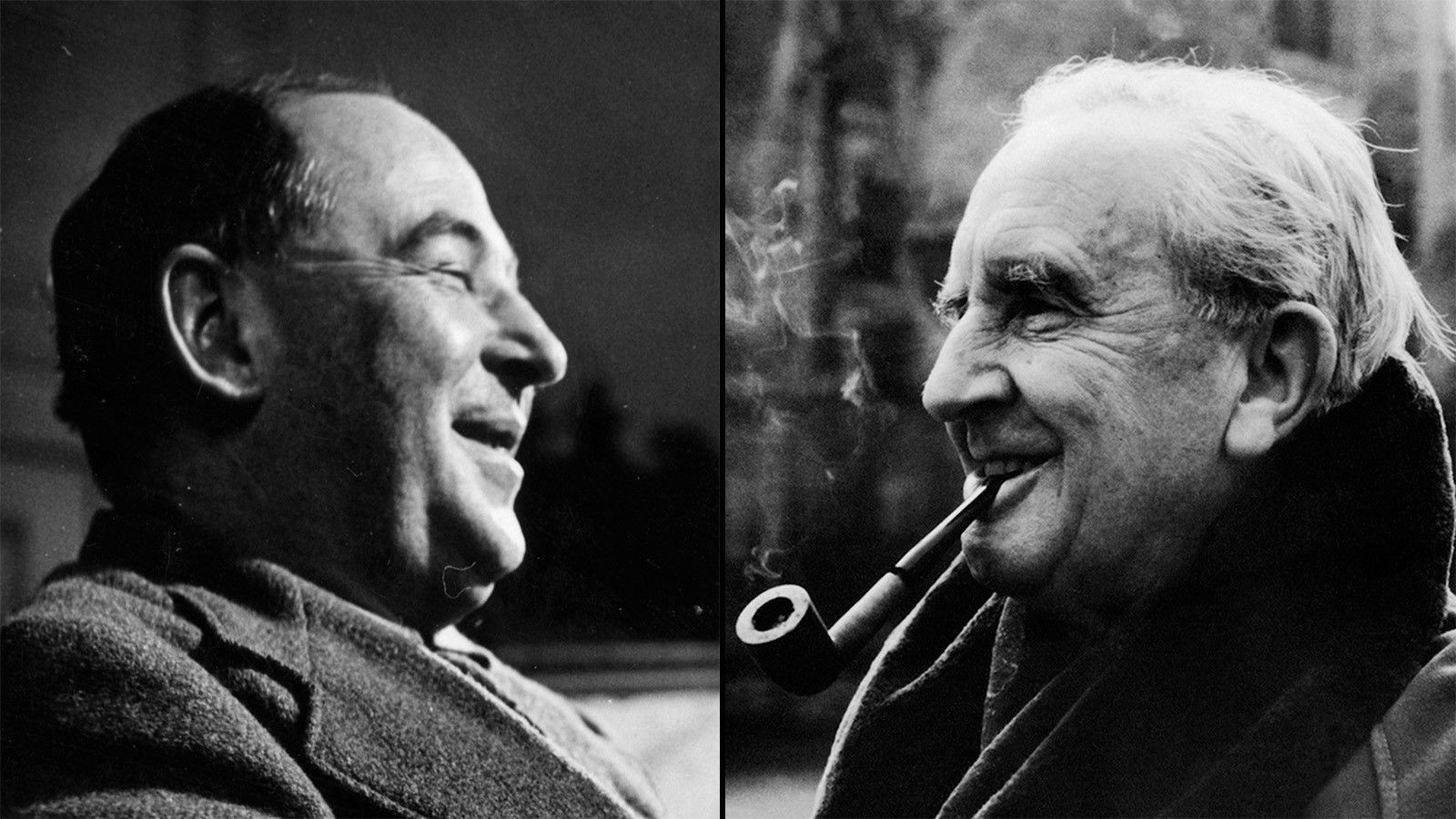
"I'm Glad You're With Me"


Image result for tolkien lewis

“How do you pick up the threads of an old life? How do you go on, when in your heart you begin to understand, there is no going back? There are some things that time cannot mend. Some hurts that go too deep.”

The Treaty of Versailles, the official end of World War 1, took place 100 years ago this summer. It was signed on June 28, 1919, exactly five years after the assassination of Archduke Franz Ferdinand, the spark that lit the match that began the great war. Although the armistice of November 1918 ended the combat, it took months of negotiations for the peace treaties to be concluded.

Earlier this year, historian Joseph Loconte spoke at the National World War 1 Memorial and Museum in Kansas City, MO. He was there to present his book, "A Hobbit, a Wardrobe, and a Great War."

Loconte said that when the last soldier was killed just one minute before the armistice, an appalling silence prevailed. That's a good description of what took place in the weeks and months after the war. Despite the parties and the parades marking the end of the war, an appalling silence prevailed.

Historian Paul Johnson has called World War 1 "the primal tragedy of modern world civilization, and the main reason why the 20th century turned into such a disastrous epoch for mankind." As Winston Churchill famously said - "All the horrors of all the ages were brought together there."

World War 1 was called the The Great War. It was supposed to be the War to End all Wars. Some even called it The War to Usher in the Kingdom of Heaven. But it didn't quite work out that way. It was more like the reign of Sauron ushering in the Kingdom of Mordor.

Two of the greatest authors of the 20th century, J.R.R. Tolkien and C.S. Lewis, fought for Britain in the Great War. Tolkien was a 2nd lieutenant in the British expeditionary force, and as such fought on the western front in the war. He took part in the Battle of the Somme, one of the bloodiest battles in human history. Lewis was also a 2nd lieutenant in the British army, and he had what you might call a baptism by fire, unceremoniously arriving into battle on the day of his 19th birthday.

By the time Tolkien returned home due to trench fever, his battalion had been almost completely wiped out. "By 1918 all but one of my close friends were dead." Nearly the same could be said of Lewis. Both of them were literally, physically, and emotionally scarred from the dreadful experience. To the shell shocked veterans who survived the war, the mood was one of cynicism, despair, and disillusionment.

It was a true spiritual crisis in Europe as people tried to cope with the new normal and pick up the pieces of a former life. For Tolkien and Lewis, however, this was not their first brush with tragedy. Before they experienced the horrors of trench warfare, they both had lost their mothers to death at an early age. You might say they both lost their fathers as well - Tolkien's father to death, and Lewis' father to despair and melancholy on the death of his wife. These shared experiences would bring them together and strengthen their bonds of friendship and fellowship.

Although they both fought in World War 1, Tolkien and Lewis did not actually meet until 1926, several years after the war had ended. They met in Oxford, where they had both become professors of English literature. They quickly became friends and enjoyed walking, talking, smoking, and drinking together. They would later establish the writers group known as the “Inklings”, meeting at the Eagle and Child pub each week to read and discuss each other's literary work.

Josoph Loconte writes, "It's hard to think of a more consequential friendship in the 20th century - a friendship that emerged out of the sorrow and suffering of World War 1. What they experienced on the battlefields of Europe shaped the worlds of Middle Earth and Narnia."

Both Tolkien and Lewis wrote grand tales of epic lands in the midst of a great struggle between good and evil. For Tolkien it was “The Lord of the Rings”, and for Lewis, “The Chronicles of Narnia.” It was their way of taking all of the evil and ugliness they had experienced in World War 1, and turning it into something good and true and beautiful. As the patriarch Joseph famously said to his brothers at the end of the book of Genesis, “Man meant it for evil, but God meant it for good.” It's the answer to Sam Gamgee's question in The Return of the King - “will everything sad finally come untrue?”

This is a picture of Luther's “theology of the cross” – the unexpected and mysterious way in which God orchestrates and delivers His plan of salvation to the world. For it is in suffering, pain, and even death that God chooses to work His deeper magic and bring about redemption, restoration, and new life for all people.

Ultimately it is at the cross of Calvary, through the shed blood of Jesus Christ, the great Lion of Judah, that the stone table is broken, and everything sad does indeed finally come untrue. In the supreme “eucatastrophe” of His death and resurrection, we finally have peace with God, forgiveness of sins, and the promise of life eternal with Him in heaven.

But suffering and death always come first. Crucifixion comes before resurrection. The cross comes before the crown. The glory comes at the end of the story … but oh how glorious it will be.
“For our present sufferings are not worth comparing with the glory that will be revealed in us.” - Romans 8:18

Though the world wars are over, the world is still very much at war. Here in this first week of September, as we commemorate the day of Tolkien's death, the specter of war is still before us, as it will be until Christ comes again. But even in the midst of the chaos and confusion of this world, Tolkien and Lewis help us to remember that God is still in charge and that Jesus still sits upon the throne. He rules over our ruins, with the promise that a renewed Cair Paravel is coming, and that a restored Minas Tirith awaits.

“I'm glad that you're with me ... here at the end of all things.”

+++


Monday, July 29, 2019

Christmas in Galatians


Image result for christmas in galatians

Christmas in July is in full swing this week. It's one of those made up holidays that originated at a girls camp in North Carolina in 1933. It has become kind of a big deal over the last few years – and a great reason for shopping centers, strip malls, and online retailers to have mid-summer sales. Even the White House is planning a Christmas in July event. So why not the church? 

For the last few years we have celebrated Christmas in July at our church on the last Sunday of the month. Everyone seems to enjoy the wonderful worship, festive fellowship, and of course, the christmas cookies. (We also try to have a canned food drive for the local food pantry.)

Additionally, this year we find ourselves smack dab in the middle of the book of Galatians in our Adult Bible Class. Just in time for Christmas. Why do I say that? Because when you open up your Bible to Galatians chapter 4, what you find is the Apostle Paul's celebration of Christmas.

Now of course, Christmas as a festival came much later for the early church. Easter was the first great festival of the church accompanied by the first Christian creed, “Christ is Risen”, which was soon followed by “Jesus is Lord”. Only later did the early believers begin wondering about the details surrounding Jesus' birth. Of utmost significance to them was the suffering, death, resurrection, and ascension of the Lord Jesus Christ – as it still should be for us today.

But Christmas is still wonderful – and full of wonder as well. That's why the Apostle Paul gives us this radiant passage in Galatians 4 to illuminate us with the Christmas Gospel. “When the fullness of time had come, God sent forth His Son, born of a woman, born under the law, to redeem those under the law, so that we might receive adoption as sons. And because you are sons, God has sent the Spirit of His Son into our hearts, crying 'Abba Father!' So you are no longer a slave, but a son, and if a son, then an heir through God.”

We don't get much Christmas in the Epistles. There is Philippians 2 where Jesus is “born in the image of men”, and Colossians 1 and 2, where in Him “the fullness of God dwells bodily”. But there isn't much else. And aside from Luke 2, there isn't much in the Gospels either. Half a chapter in Matthew 1 and that's about it. But here Paul give us the whole enchilada in just 4 short verses. The mystery and majesty of the incarnation of the Son of God wrapped up into a single package. And guess what? It's got your name on it! Because what God has done my sending His own Son is for you – all for you.

In the fullness of time. What a captivating phrase. It has always been a fascinating idea to me - that Almighty God in His infinite wisdom looked down upon the sons of Adam and daughters of Eve, and as executive director and producer of the entire cosmos, orchestrated everything just so that when the time was right, He sent forth His own Son, to be born of a virgin, to live a perfect life, die a sacrificial death, and rise victoriously from the grave for us and for all.

Talk about mind blowing. That's the kind of thing that can keep you up at night pondering all of the perplexities and intricacies therein. But fortunately for us (and for everyone else) we're not in charge of ruling the universe. Our Three-in-One God has that under control, thank you very much. And because the Son was born under the law to redeem those under the law, we can now have peace with God the Father through our Lord Jesus Christ by the power of the Holy Spirit.

“Therefore, since we have been justified by faith, we have peace with God through our Lord Jesus Christ. Through Him we have also obtained access by faith into this grace in which we now stand, and we rejoice in hope of the glory of God.” - Romans 5

We have peace and joy because we are now sons and daughters of God who are able to call out to Him, “Abba, Father!” No longer slaves, but sons, and if sons, then heirs of heaven.

All that's left for us to do is the same thing we do when receiving a Christmas present. Smile and say thank you. Or as Martin Luther put it – thank, praise, serve, and obey - this is most certainly true.

+++ 

Monday, July 15, 2019

CS Lewis and the Return of the British Open


"The longest way round is the shortest way home."

The Open Championship (or British Open) is one of the four major tournaments in golf and is one of the largest sporting events in the world. It is being held this week at Royal Portrush in Northern Ireland - the first time this event has been back in Ireland for nearly 70 years. So what does this have to do with CS Lewis?

Lewis was born and raised in and around Belfast, Ireland. He and his family would often take family vacations to Portrush and the surrounding area, just over an hour away. There were beaches, an amusement park, natural attractions, and yes, even a castle. Just the place for a little boy with a fertile imagination.

One of the main natural attractions in the area is the Giants Causeway - a series of hexagonal rock formations which are the result of ancient volcanic activity. Of course, the Irish have a different story. They say that the causeway was formed by a scuffle between two giants who once lived there. Perhaps this was the place Lewis was thinking of when he wrote about the giant’s territory of Harfang in the Silver Chair.

Dunluce Castle is not far away - sitting high atop a cliff overlooking the Irish Sea. Although now it is just a skeleton of its former self, it is still a majestic sight on the rugged coast. It must have made quite an impression on little Jack when he saw it for the first time as a child. Many believe that this castle was the inspiration for his royal city of Cair Paravel in the Chronicles of Narnia books.

In Narnia, the castle also happens to be right on the edge of the sea. After ruling there during the Golden Age of Narnia, the four Pevensie children return when called back by Prince Caspian. Upon their return the castle is overgrown and in ruins, a mere semblance of what it once had been, but still standing and still evocative.

The Open Championship returns to Ireland this week for the first time since 1951. What else happened that year? Prince Caspian was published as the second book of the Chronicles of Narnia series, which tells about the ruins of Cair Paravel, inspired by Dunluce Castle.

We often think of CS Lewis as an Englishman since he lived and taught in Cambridge and Oxford. That is of course true in part. But he always remained an Irishman at heart, returning to his home country nearly every summer for a holiday by the sea.

These brief times of joy for Lewis would anticipate and finally culminate in that final journey home to Aslan's country, which for him was only the beginning of the real story. All his life in this world and all his adventures had only been the cover and  title page. Now at last he was beginning chapter one of the Great Story, which no one on earth has read, which goes on forever, in which every chapter is better than the one before.

Monday, April 1, 2019

scripture interprets scripture


This graphic is an amazing example of how the Bible speaks to itself and interprets itself. The bar graph on the bottom represents all the chapters in the Bible, while the nearly 64,000 textual cross references are depicted by colored arcs, which correspond to the distance between two chapters.

Stunning ...

+++

Thursday, March 14, 2019

keller on tolkien on fairy stories

Image result for on fairy stories


"There is a kind of story that all people crave. It doesn't matter if they are religious or secular, there is one type of story that everyone wants to hear. It is a story with a supernatural world where miracles can happen, where you can cheat death and come back to life again. It is a story that show us a love that is eternal, where good triumphs over evil, where the good guy wins in the end after much tribulation, where victory is snatched from the jaws of defeat, and where the victors live happily ever after. It is a story of a sacrificial hero that brings life out of certain death.

Modern critics hate these kinds of stories because they see them as just fairy tales. They say that life isn't really like that so we shouldn't be telling these kinds of stories. But Tolkien points out, on the contrary, that these stories connect to our deepest human longings, to those things that we all hope and dream and wish for.

The impression we are given by our culture is that there is no supernatural world, that evil will triumph over good, that death is the end, and that love is not eternal. But on a gut level, most people know that this is not right. That's not how it's supposed to be.

That is why, even though fairy tales aren't true, most people feel that they are true. Because they point to an underlying reality that is almost more true than the way life is being lived in this world.

And the greatest fairy tale story of them all? The story of Jesus. This one has it all - a supernatural world, a love that conquers all, good triumphing over evil, escape from death, heroic self sacrifice - it's got everything people hope to find in a good story.

But there is one difference. This is the one grand fairy tale story that is actually true. It really happened. It is not merely another story pointing to the underlying reality. The story of Jesus is the reality to which all the other stories point."

- Tim Keller

+++